



Visiting Chichen Itza, one of the New 7 Wonders of the World, is almost a must if you’re in the Riviera Maya. With the largest ball court in the Maya world and the incredible descent of the serpent during the equinox, this archaeological site is more than just a tourist stop – it’s a journey through time.
Is a Chichen Itza tour worth it?
Chances are, before arriving in the Riviera Maya, you’ve already heard that not visiting Chichén Itzá is like going to Paris and skipping the Eiffel Tower. And yes, it’s hard to resist the idea of seeing one of the New Seven Wonders of the World.
That said, visiting Cobá instead is not a mistake – it’s just choosing the road less traveled. Both are fascinating Maya cities, but the experience they offer is completely different.
My advice: if you can, visit both Cobá and Chichen Itza. If you’re short on time, your choice will depend on your interests and the type of experience you’re looking for. Need help choosing which ruins to visit? Click here.
Highlights of Chichen Itza
Chichen Itza means “at the edge of the well of the water wizards” in the Maya language. That’s how locals referred to these ruins — although its original name is still unknown, as is the case with many ancient Maya cities.
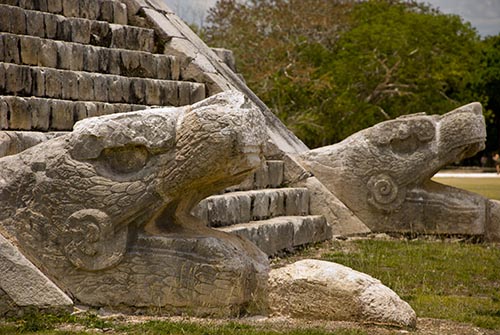
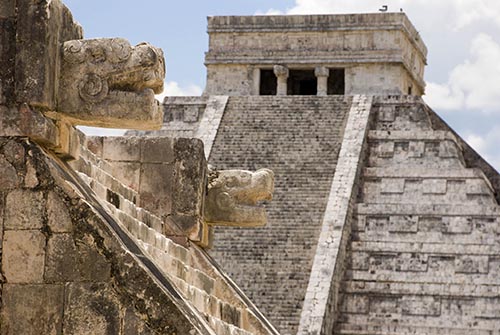
The Temple of Kukulkán (the Feathered Serpent) is an architectural and astronomical masterpiece. Built over an earlier pyramid, it produces a shadow effect during the equinox, where a serpent-shaped shadow appears to descend the steps and connects with a carved serpent head at the base. This is one of the main reasons why thousands of people take a Chichen Itza tour every year.
Beneath the pyramid, archaeologists recently discovered a sacred cenote — an underground freshwater sinkhole — which held deep spiritual meaning for the Maya. The number of steps and panels in the pyramid isn’t random; everything is aligned with the Maya calendar and belief systems.
What else to see at the site
The Sacred Cenote may not be the most visually impressive cenote, but the stories hidden beneath its waters are extraordinary.
Chichen Itza is also home to the largest Maya ball court ever found. While it wasn’t used like a regular game court (there are actually 12 others in areas currently closed to the public), it remains one of the most iconic structures.
The Temple of the Warriors, with its rows of carved columns showing warriors, priests, and captives, is another highlight.
A typical visit includes the Kukulkán Pyramid, the Great Ball Court, the Temple of the Jaguars, the Temple of Venus, the Sacred Cenote, and the Temple of the Warriors. Just exploring this central area can take 1.5 to 2 hours. If time allows, you can also venture further to Las Monjas, the Observatory, and the Red House.
The History of Chichen Itza
Many explorers visited this site, but none had as much impact as Edward Thompson, the U.S. consul to Yucatán in 1894. He bought the land and built his hacienda right on the site. Though he had no archaeological training, he spent years digging and exploring freely. He even dredged the Sacred Cenote to recover artifacts.
Eventually, the Mexican government expropriated the land, and real archaeologists began restoration work (some say too much), gradually recovering structures swallowed by the jungle.
Chichen Itza was declared a UNESCO World Heritage Site in 1988.
Thanks to ancient texts like the Chilam Balam and inscriptions on monuments (mostly in areas closed to visitors), researchers have pieced together the history of this once-great city. The Chilam Balam, written between the 16th and 17th centuries after the Spanish conquest, recorded oral histories passed down by generations of Maya. Although memory and time may have distorted some details, these books remain vital sources for understanding the Maya world in the Yucatán Peninsula.
Chichén Itzá was abandoned during the Maya decline, later reoccupied by a different culture, transformed into a major religious center, and finally destroyed by its neighbors. Its entire story remains engraved in its buildings.
Tips to Enjoy Your Chichen Itza Tour
Arrive early. The site opens at 8:00 a.m., and early visits avoid crowds and the midday heat. From Playa del Carmen, you can reach Chichén Itzá in about 2 hours via the Mérida–Cancún toll highway.
Hire a professional guide. A good guide will make all the difference — turning piles of stones into vivid stories and unforgettable memories. Be aware that not all guides are licensed.
Expect heavy tourism. Chichén Itzá receives over 3 million visitors per year. Inside, you’ll find countless souvenir stalls, which can detract from the historical atmosphere, but they’re part of the site’s current reality.
Ready for your Chichen Itza tour?
Whether for its history, architecture, or the powerful atmosphere it exudes, Chichen Itza is a place that leaves a lasting impression. Be ready to walk, explore, learn… and be amazed. Explore a virtual tour at INAH (National Institute of History and Arqueology) HERE.

