



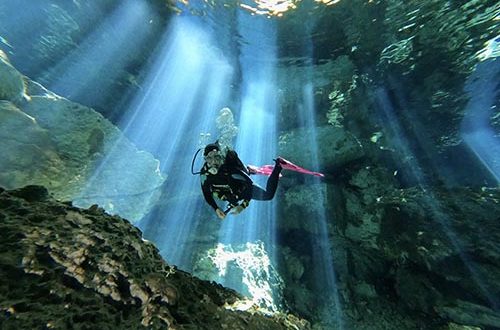
Every cenote has something special. Some will amaze you with their crystal-clear waters, others with the way light filters through the surface or the surreal shapes of stalactites hanging from above. There’s no such thing as “the best cenote”—the right one depends on you. If you’re drawn to natural light shows or rock formations that feel out of this world, there’s a perfect cenote diving experience waiting just for you.
Unmatched Visibility in Cenote Diving
Cenote diving offers visibility like nowhere else—up to 60 meters or more. What limits your view is not the water, but how far your eyes (or your dive light) can reach. With no suspended particles and only the occasional freshwater fish gliding by, it feels like you’re flying through a silent, stone cathedral.
For underwater photographers, cenotes are paradise. The water is so clear, all you have to worry about is framing the perfect shot. You won’t find clearer water anywhere else.

Light Beams and Underwater Spectacles
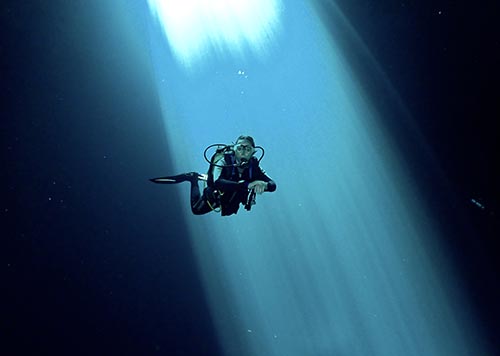
The shape and size of cenote openings vary, and with them, the light effects. Wide entrances allow sunbeams to flood in, while even a tiny hole in the ceiling can project a laser-like shaft of light when the sun is high. It’s the kind of place where even the most basic camera can capture a breathtaking image.
Imagine sunrays cascading from the surface, columns of light that seem to descend from another planet, or silhouettes of trees and stalactites bathed in golden glow. Some moments are simply unforgettable.
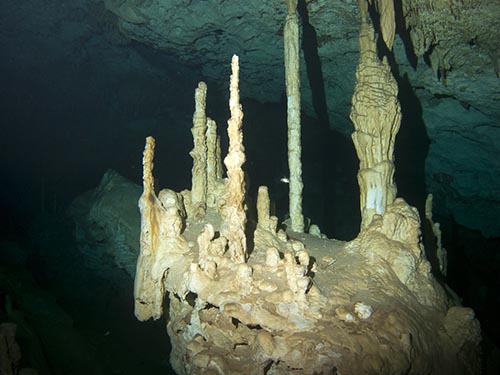
The Otherworldly Beauty of Speleothems
Stalactites and stalagmites are familiar formations—until you see them underwater in such massive numbers. It’s like diving through a gothic cathedral sculpted over millions of years. As your light sweeps across the scene, shapes and details slowly emerge, and each corner reveals something new. Gliding among these ancient columns is a magical experience.
The Halocline: Where Fresh and Salt Water Meet
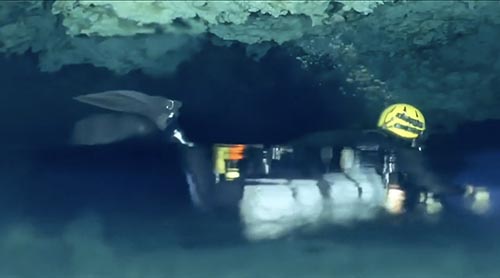
Most cenotes contain fresh water at the surface, but deeper down, salt water from the sea can seep in through underground rivers. The place where both waters meet is called the halocline. Because of their different densities, they don’t mix easily—like oil and water. When you descend into the salt layer, you “break” the halocline, creating a shimmering trail behind you. The visual effect is incredible, and the feeling is one-of-a-kind.
We’ve added a video so you can see the halocline in action.
Hydrogen Sulfide Clouds
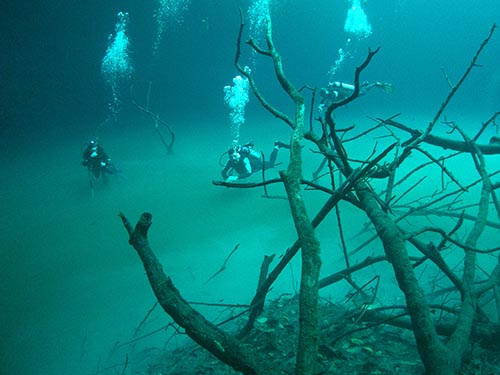
Some deep cenotes offer a rare phenomenon. Organic material like trees and leaves has been decaying at the bottom for thousands of years, releasing gases. These gases get trapped in the halocline, forming cloudy, surreal layers that look like drifting fog. The gas is hydrogen sulfide—harmless in small quantities, but with a strong, unpleasant smell. Diving through these ghostly clouds is an experience you’ll never forget.
Words can only go so far. The only real way to understand what makes cenote diving so special… is to do it.Ready to explore the best cenote diving spots in the Riviera Maya?
Check out our video: 8 Reasons to Dive in Cenotes
And when you’re ready to dive in—literally—here’s everything you need to book your cenote diving tour.

