






If you’ve ever wondered what it’s like to dive into history—literally—then Cozumel’s C-53 Felipe Xicoténcatl is your dream come true. This sunken giant is not just an artificial reef; it’s a piece of World War II history resting peacefully under the turquoise waters of the Caribbean. Let’s explore its story, from wartime hero to one of Cozumel’s most popular dive sites.
Where is it and what makes it special?
The C-53 lies just off the coast of Cozumel, within the boundaries of the Cozumel National Marine Park. It was intentionally sunk in 2000 to create an artificial reef and a new attraction for divers. Sitting at about 24–27 meters (78–90 feet) deep, it’s accessible for advanced open water divers and above.
Today, coral and sponges cover its steel hull, while groupers, barracudas, and schools of snapper patrol the corridors. But what makes this site unique isn’t just its marine life—it’s the history embedded in its steel bones.
From USS Scuffle to C-53 Felipe Xicoténcatl
Before becoming a diver’s playground, the C-53 had a long and honorable career under two flags.
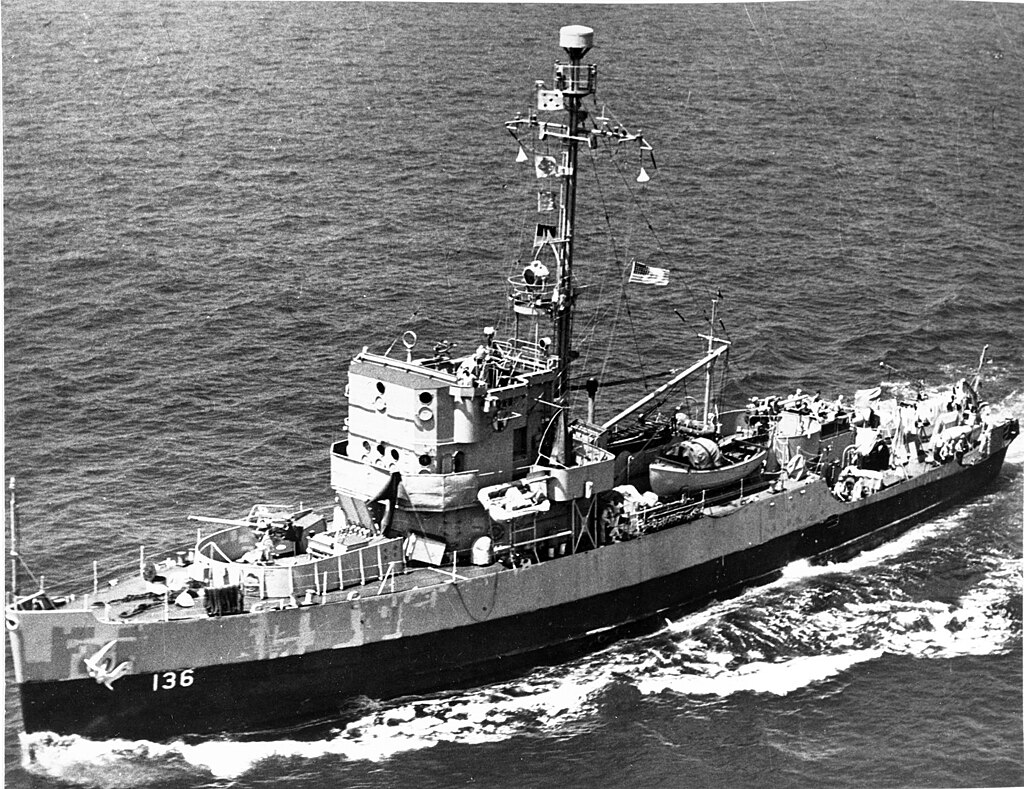
- Launched in 1944 by the United States as the USS Scuffle (AM-298), she was an Admirable-class minesweeper, a workhorse of the U.S. Navy during WWII.
- The Admirable-class was designed to detect and remove naval mines, protecting fleets from one of the deadliest threats at sea.
The USS Scuffle saw action in the Pacific during the final years of the war. She participated in minesweeping operations in Okinawa and the East China Sea, making the waters safe for Allied ships and troops. Minesweeping was a risky business—one wrong move and the ship could be blown apart—but these vessels were crucial for naval operations.
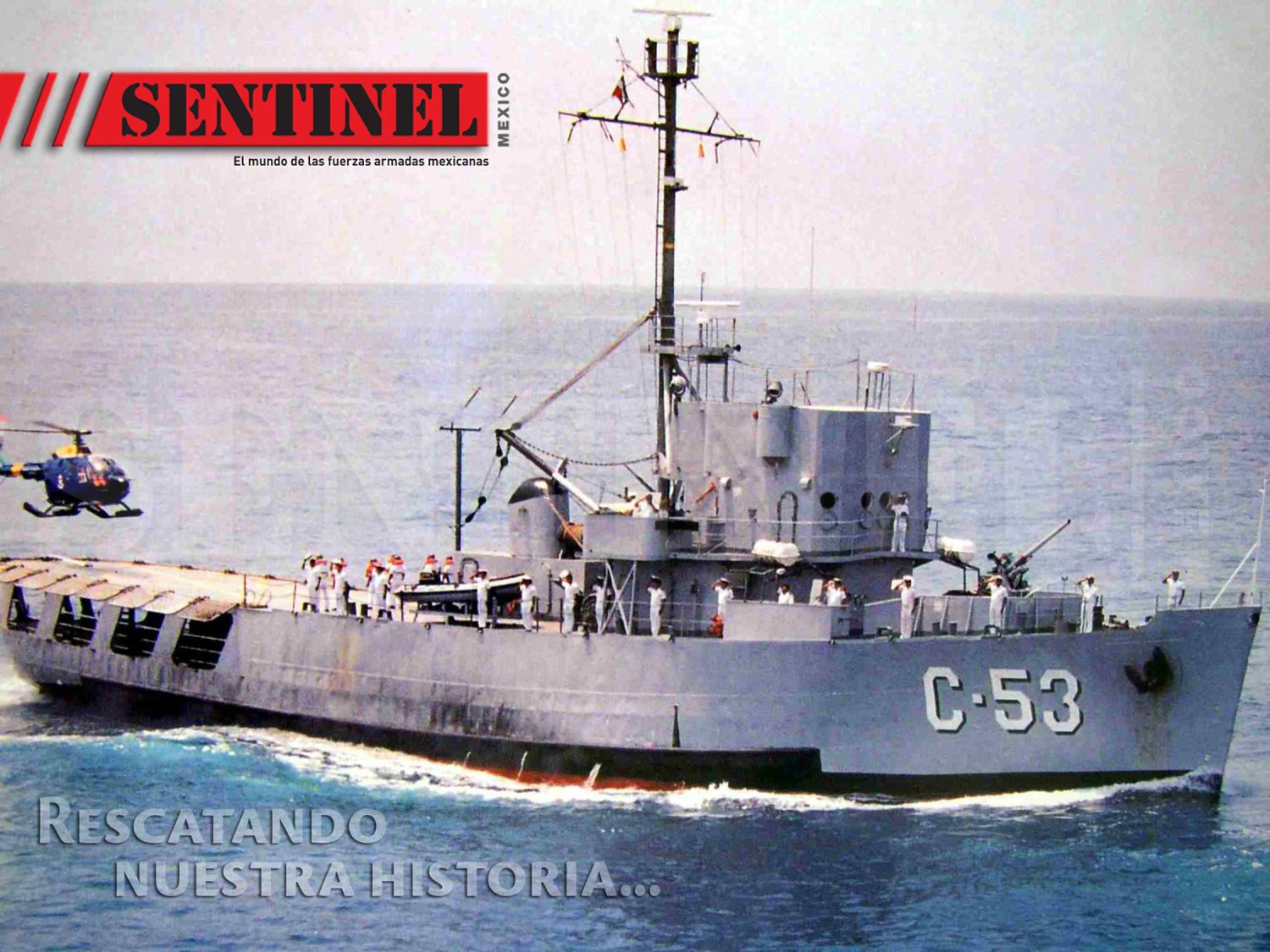
After the war, the USS Scuffle continued serving the U.S. Navy in various roles until 1962, when she was transferred to the Mexican Navy. Under the Mexican flag, she was renamed ARM Felipe Xicoténcatl (C-53), honoring a 19th-century Mexican war hero. For decades, she patrolled Mexican waters, performing search and rescue operations, surveillance, and coastal defense.
What exactly is a minesweeper?
During WWII, naval mines were a nightmare—silent killers lurking just beneath the surface, capable of destroying ships with a single explosion. Minesweepers like the Admirable-class were designed to clear these hazards.
They used:
- Acoustic gear to mimic ship noises and trigger mines.
- Magnetic cables to detonate mines that responded to metal hulls.
- Mechanical sweeps to cut the cables of moored mines so they floated to the surface and could be destroyed.
The Admirable-class was about 56 meters (184 feet) long, with a beam of 10 meters (33 feet) and a displacement of around 650 tons. She was armed with deck guns and depth charges—not to fight big naval battles, but to defend herself and deal with enemy submarines if necessary.
Parts of a minesweeper
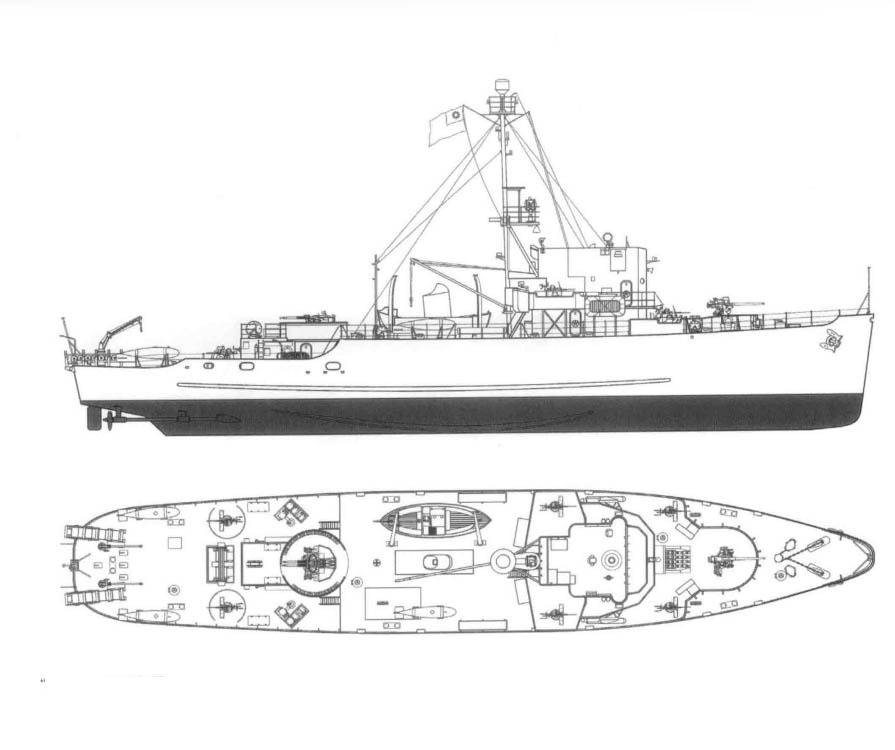
Exploring the C-53 underwater today, you can still identify many of her original features:
- Bridge and wheelhouse: Where the ship was commanded.
- Forward gun mount: Now covered in coral, it once held a 3-inch gun.
- Engine room: The heart of the ship, now accessible to divers with proper training.
- Crew quarters: Narrow spaces where sailors lived during long missions.
If you compare her to historical diagrams of the Admirable-class, you can see how divers today swim through what were once workstations, gunnery positions, and mine-handling areas.
From naval veteran to diver’s paradise
By the late 1990s, the C-53 had reached the end of her service life. Instead of scrapping her, the Mexican Navy decided to give her a new mission—becoming an artificial reef.
On June 6, 2000, she was cleaned of pollutants and explosives, then deliberately sunk near Cozumel. Within months, marine life began to colonize her hull. Today, she’s home to vibrant coral growth, schools of tropical fish, moray eels, and occasionally turtles and eagle rays.
Diving the C-53 today
A dive here is a mix of history and adventure. The wreck sits upright on a sandy bottom, perfectly positioned for exploration. Penetrations into the interior reveal control rooms, passageways, and the engine space. Light filters through hatches and portholes, creating stunning photo opportunities.
With your flashlight in hand, you’ll see the ship’s skeletal framework intertwined with sponges and sea fans—nature slowly claiming her. It’s a surreal reminder that this peaceful underwater world was once a tool of war.
Why dive this wreck?
History you can touch: You’re not just reading about WWII—you’re swimming through it.
Marine life: The C-53 is a thriving reef.
Accessible adventure: Suitable for advanced divers without extreme depths or currents.
So, if you’re planning your next trip, put Scuba diving in Cozumel shipwreck at the top of your list. The C-53 Felipe Xicoténcatl is waiting, blending the thrill of exploration with the echoes of history.


No Comments Yet